
Wednesday, 28 November 2018
Saturday, 17 November 2018
Thanks to Tim McLaren
 I wish to thank Tim McLaren for his generosity and assistance in testing peak performance capabilities of the RANDALLfoil at UTS Haberfield, Sydney. The challenge of any new design is ensuring that it can perform at all levels, from beginners to elites. With confidence, elite athletes can utilise the performance benefits of this design.
"Your world-class athlete can perform with whatever they row with because they have a mental toughness that sets them apart. It will be interesting to see if they will consider exploring the [RANDALLfoil] design." Tim McLaren

Tuesday, 6 November 2018
Rich Kesor - Head Coach of Montgomery Bell Academy

Rich's dedication to his boys and staff is for all to see. Rich has personally checked over every aspect of his program, each boat, oar, down to each nut-and-bolt. Not to mention the hours of coaching time and driving boats to each regatta.
As a maths and physic teacher, Rich has understood the importance of oar performance and has considered in the past methods and innovations to assist the students he coaches.
It was under Rich's leadership that Montgomery Bell Academy was the first Rowing Club to put their full confidence in the RANDALLfoil.
Well done Mr Kesor, a world-leading rowing coach!
You can catch some MBA races here on YouTube
Thursday, 1 November 2018
Historical 'foil' designs: close but missed some critical points
There have been a number of historical designs which look similar to the RANDALLfoil but simply failed to perform, this is why...
 |
| Braca Sport - Hatchet Blade |
Both Braca Sport and Croker Oars have trialled 'wave' formation blades in the past. These designs involve extending the top lip in an attempt to capture the water flowing over the blade. The aim of this design was to create more hold or grip on the water. You will also notice some current C2's seem to have the remnants of such a design element. The Croker wave formation was disbanded in the prototype phase as the rowers were not able to extract the blade cleanly from the water at the finish. These 'wave' designs were not effective in preventing the blade from being buried and once submerged could not be released.
In contrast, the RANDALLfoil design does not employ a wave formation, but a distinct opposing surface which is set against the flow of the water - a hydrofoil.
In contrast, the RANDALLfoil design does not employ a wave formation, but a distinct opposing surface which is set against the flow of the water - a hydrofoil.
The primary design concept was not to create more hold on the water (though this has been one of the surprise results, a measurable reduction in catch slip) instead to eliminate all contact between the water and the oar shaft. The oar shaft is a pure lever and when in contact with the water acts like dragging a pole through the water. The buried shaft serves only as a point of resistance against the effort of the rower.
The RANDALLfoil creates a hydrofoil lift effect without the rower being able to bury the shaft through the water whilst employing a technical and powerful horizontal rowing stroke.
The result : faster boat speeds
The RANDALLfoil creates a hydrofoil lift effect without the rower being able to bury the shaft through the water whilst employing a technical and powerful horizontal rowing stroke.
The result : faster boat speeds
 |
| RANDALLfoils eliminate oar shaft drag |
 |
| RANDALLfoils eliminate oar shaft drag |
Monday, 22 October 2018
CLEAN SWEEP
Another dominant performance from Montgomery Bell Academy at the 2018 Secret City Head Race.

All 4 of the gold medals (Light 8, Light 4, Novice 8, Novice) and a silver (Light 4) and bronze (Novice 4) were won with RANDALLfoils

Full race here
Saturday, 20 October 2018
RANDALLfoils enters the surf
Congratulations to Damien Daley of DD3.com for coaching his crew to victory in the first round of competition. This race marked not only the first time DD3 VORTEX cleaver oars were used in surf competition but also with RANDALLfoils. A winning combination.


Sunday, 7 October 2018
FISA Sports Medicine, Science and Coaches Conference
I will be making a presentation about the discovery, development and certification of the RANDALLfoil at the forthcoming FISA Coaches Conference in Berlin.
For those who are attending, please come and say hello.
Ian
My presentation can now be viewed here

For those who are attending, please come and say hello.
Ian
My presentation can now be viewed here

Saturday, 22 September 2018
PARA-ROWING the benefits of RANDALLfoils

The benefits of using foils with Para-Rowing are two-fold; Performance and Safety. As para-rowing equipment is heavier and less streamlined the performance gain with foils is greatly welcomed. RANDALLfoils create a more efficent oar enabling greater performance for less effort.
RANDALLfoils also provide a more controlled and predictable stroke as the blade is held at a precise depth making rowing safer and more enjoyable.
I would like to commend the work Barbara Ramjan is doing to prepare Para-Rowers at all levels of the sport, from National Selection to learn-to-row.

Wednesday, 19 September 2018
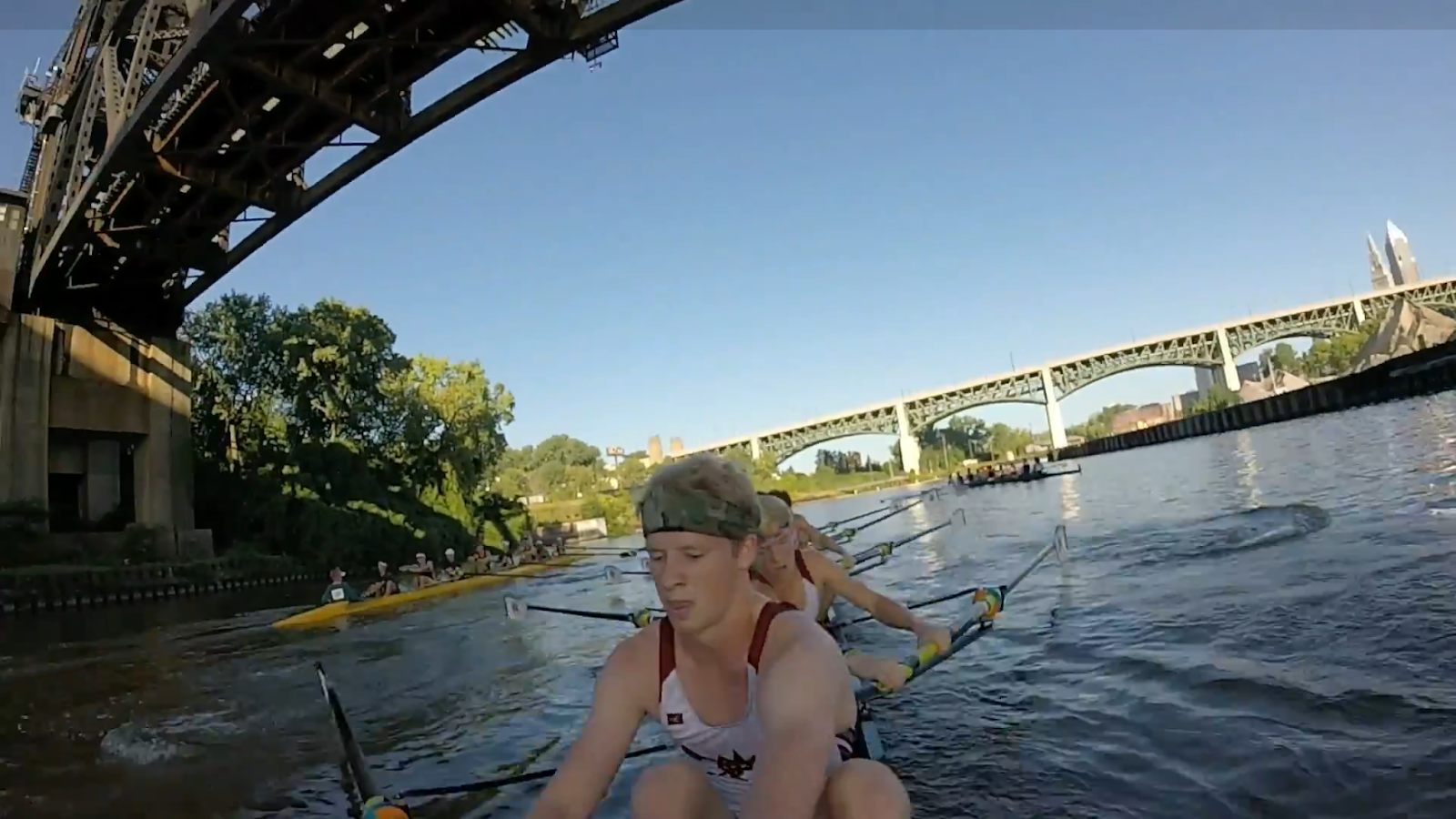

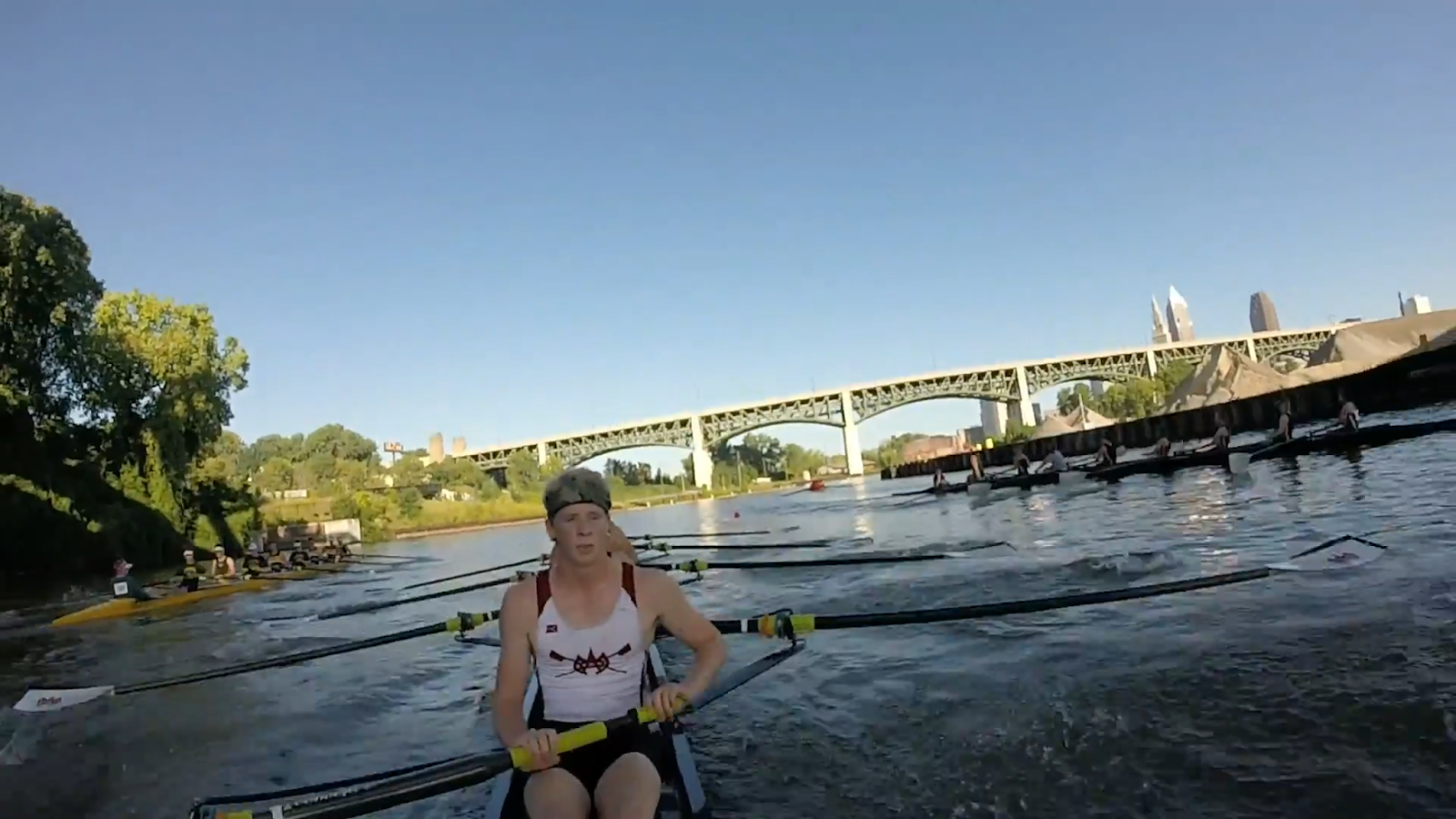
Special thanks

To see Jakob’s review...https://youtu.be/5DSUo6IdaBs
Saturday, 15 September 2018
New course record

Congratulations to Montgomery Bell Academy, Nashville, USA for breaking a local 5k course record by 35 seconds. Hard work and RANDALLfoils working together.


Monday, 10 September 2018
Aram Lemmerer

I am excited to announce that Aram Lemmerer (aramtraining.com) will be joining the RANDALLfoil team as a design consultant and distributor. Aram is a world class rower, lead innovator and high-performance coach and is continually in pursuit of best practice in all aspects of rowing. Aram works with emerging talent, elite athletes and masters rowers. He is best known for his online video analysis and the founder of the world's leading 'highspec' indoor rowing machine, the 'Biorower.' It is an honour be working with Aram and together we will work to optimise the design and performance of the RANDALLfoil, so you will benefit from this key design innovation.
Sunday, 26 August 2018
Three Gold Medals for US Masters

Congratulations to David Harralson and Eric Gillet claiming gold in J Class (80+) in Men's 2- , Heavyweight 1x and Lightweight 1x.
An outstanding result for all rowers to aspire to.
... using RANDALLfoils
Thursday, 16 August 2018


Recent Review
As a 59-year-old Masters rower, let me describe my experience with RANDALLfoils. My wife (46) and I compete in the Mixed Masters 2x and in our singles. We prefer longer events from head races on up to full marathons. For Masters rowers, we train very hard rowing over 3 million meters per year (the bulk of this is on the water). We race to test the limits of our human potential, so results matter. A lot. For several years, we have had coaches tell us that to go faster we need to row more horizontal and stop going deep. Great, but how do we fix this issue? We have tried various drills and rigging adjustments, but we just couldn't solve this problem. About a year ago, I learned about Ian Randall's work and recently, I discovered that his foils are available for purchase. So we purchased two sets of foils for our Concept2 Skinny Oars with Fat2 blades. We have just completed ~150 kilometers of testing with the foils, mostly in our double but also in our singles. Overall, we are very pleased with the results. We no longer go deep, ever. In my single, I used to take an occasional very deep stroke with my port oar that really upset the boat, especially during a race. I cannot emphasize enough that the foils prevent this. Can you imagine a sprint race, where you go deep on the first stroke? That happened to me several times and it ruined several sprint races. While we don't focus on sprint racing, my racing starts are much better now.
In both our singles and our double, we row much smoother now. Our power is even on both sides so our boats are more stable. This gives us a better recovery. We are able to keep our blades off the water almost all the time now. This stability also yields more reach and better catches. Our meters per stroke are soaring and our splits are sinking.
At this point, it is hard to be quantitative about how much faster we will race with the foils. We will base our results on two upcoming head races this fall where we will compete against the same crews as in years past. But when we row better, look better and feel better, I am already sold on the RANDALLfoils. Sure, there will be skeptics who will doubt a 3% to 5% speed advantage for the foils, but what about the potential speed increases for those of us who do not already row like elite athletes? If anything, studies to date may underestimate the potential advantage of the foils for those of us who are more technically challenged by this sport. For instance, if I eliminate a 5-second loss on my first stroke of a 1000m race, the foils have already given me a 2% speed increase. That is a big deal if I am already finishing second or third in said regional sprint race. I'll report back in November after we have some race results.
Bob Symonds (Wichita, KS, USA)
....
I will point out though that my above observations were almost instantaneous (e.g. they occurred since we started using the foils 1.5 weeks ago) in the sense that my wife and I have logged over 18,000 kilometers since early 2013. So it would be hard for me to attribute our sudden improvements to something else other than the foils. And clearly we are going much less deep as indicated by the tape on the shafts of the oars. In fact, we are now at the proper blade depth as discussed in Biorow.
That said, I am a PhD scientist so I appreciate your desire to quantify and thereby prove that the foils may or may not make a difference. My take is that there is a wide variation in rowing technique and fitness. For my wife and I, our main limiting factor has been blade depth; hence, the potential for improving our rowing technique and speed with the foils is enormous. However, some crews row with perfect blade depth so I do wonder if they will see a 3% to 5% in boat speed by using the foils. But quite a few elite rowers do pull deep. For instance, Mahe Drysdale is shown going deep in the following video analysis of his 2016 Henley final that he lost to Obreno.
https://youtu.be/jJlqo5G5kZc
He recently finished 4th at the 2018 World Cup III just ~7 seconds behind his teammate, R. Manson. Yet that 7 seconds cost him the opportunity to represent New Zealand in the single for the 2018 World Championships. Would he benefit from the foils? I definitely want to know the answer to that question.
Bob
In both our singles and our double, we row much smoother now. Our power is even on both sides so our boats are more stable. This gives us a better recovery. We are able to keep our blades off the water almost all the time now. This stability also yields more reach and better catches. Our meters per stroke are soaring and our splits are sinking.
At this point, it is hard to be quantitative about how much faster we will race with the foils. We will base our results on two upcoming head races this fall where we will compete against the same crews as in years past. But when we row better, look better and feel better, I am already sold on the RANDALLfoils. Sure, there will be skeptics who will doubt a 3% to 5% speed advantage for the foils, but what about the potential speed increases for those of us who do not already row like elite athletes? If anything, studies to date may underestimate the potential advantage of the foils for those of us who are more technically challenged by this sport. For instance, if I eliminate a 5-second loss on my first stroke of a 1000m race, the foils have already given me a 2% speed increase. That is a big deal if I am already finishing second or third in said regional sprint race. I'll report back in November after we have some race results.
Bob Symonds (Wichita, KS, USA)
....
I will point out though that my above observations were almost instantaneous (e.g. they occurred since we started using the foils 1.5 weeks ago) in the sense that my wife and I have logged over 18,000 kilometers since early 2013. So it would be hard for me to attribute our sudden improvements to something else other than the foils. And clearly we are going much less deep as indicated by the tape on the shafts of the oars. In fact, we are now at the proper blade depth as discussed in Biorow.
That said, I am a PhD scientist so I appreciate your desire to quantify and thereby prove that the foils may or may not make a difference. My take is that there is a wide variation in rowing technique and fitness. For my wife and I, our main limiting factor has been blade depth; hence, the potential for improving our rowing technique and speed with the foils is enormous. However, some crews row with perfect blade depth so I do wonder if they will see a 3% to 5% in boat speed by using the foils. But quite a few elite rowers do pull deep. For instance, Mahe Drysdale is shown going deep in the following video analysis of his 2016 Henley final that he lost to Obreno.
https://youtu.be/jJlqo5G5kZc
He recently finished 4th at the 2018 World Cup III just ~7 seconds behind his teammate, R. Manson. Yet that 7 seconds cost him the opportunity to represent New Zealand in the single for the 2018 World Championships. Would he benefit from the foils? I definitely want to know the answer to that question.
Bob
Wednesday, 1 August 2018
FISA grants official certification

It is with great excitement that I can announce that FISA has certified the RANDALLfoil for use in all international regatta's, including the World Cup.
I thank the FISA Executive Committee for the time they have spent considering my submission.
Sunday, 8 July 2018
Henley Royal Regatta
Congratulations to Wairau RC “Bad Boys” for making it through to the Semifinals of Henley.
Drikus Conradie (S) was instrumental in the certification process for RANDALLfoils at Henley. His NZ crew have been training with RANDALLfoils and wanted the option to race with them.
Drikus has his eye set on NZ representation and will continue to use RANDALLfoils in the coming season.
I wish Drikus every success!
Note: there was insufficient time between the Stewards approval and race day for the crew to feel confident in themselves to compete with foils, but next year will be a different matter!
Drikus Conradie (S) was instrumental in the certification process for RANDALLfoils at Henley. His NZ crew have been training with RANDALLfoils and wanted the option to race with them.
Drikus has his eye set on NZ representation and will continue to use RANDALLfoils in the coming season.
I wish Drikus every success!
Note: there was insufficient time between the Stewards approval and race day for the crew to feel confident in themselves to compete with foils, but next year will be a different matter!
Sunday, 24 June 2018
Monday, 18 June 2018
US Test Team - Lake Casitas Rowing Association
| Lake Casitas Rowing Association, California, USA |
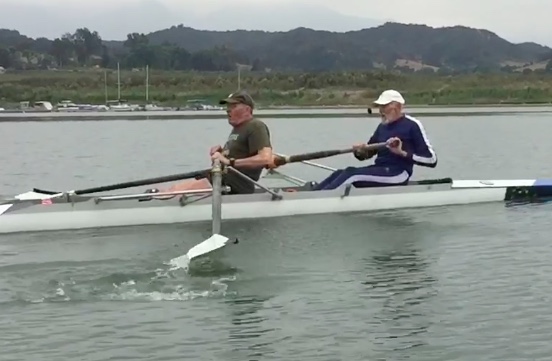
David Harralson (stroke) is US Masters National gold medalist J class (80+) is coached by Eric Gillette who medalled at World Cup in the US LM8+


Started off without RANDALLfoils.
Went through a bunch of drills until the boat balanced at catch and release.
I set a program on my CrewNerd - 300 meters, 30-second start delay. Stroke rate of 30. The boat seemed slow to accelerate and took forever to get below 2:20. I saw a best of 2:15, most over 2:20. For perspective, at WRMR at Bled last fall, the gold medal split for the J Class (80+) 2- was 2:22 or so, so this was gold medal pace in an old, slow boat. Our boat age was 81.
Eric came over with our other pair of oars with RANDALLfoils installed and we swapped. The first half of the first run felt good, but then we ran into a headwind and the last half was a struggle and Eric said we looked tired (well, by that time we had been out an hour and 6,000+ high-intensity meters). We turned around and rested a few minutes this time and did the last piece back. This was good, I saw a 2:09 with most of it between 2:10 and 2:15.
On the way back, Eric took video of us. A relaxed 26 and 3/4 stroke and pressure (I could not get more forward than 3/4 slide in that boat since I hit the front stops. I have my standard bow splash at the catch (not bad this time since I was rigged so high in the heavyweight boat) and Don was not comfortable with his oar up off the water, but otherwise, it looked OK. I love watching video, and learn something each time. It does look like the foils have my oar at almost the perfect height/depth, but my normal rowing style is just barely submerged anyway.
So, it looks like the foils give us a 5 second split rate improvement, like we saw the last time. I could feel no difference between foil and no foil. The boat just goes faster.
Monday, 28 May 2018
RANDALLfoils claim GOLD
NSW Masters Championships in MMC X2


 |
| Ian Randall (s) Magnus Butlin (b) Nepean Rowing Club MMCX2 |


Friday, 25 May 2018
ROWING AUSTRALIA Certification for all Australian Regattas
It is with great excitement that I can announce that certification of the RANDALLfoil has been granted for all Australian Regattas by Rowing Australia.


Tuesday, 24 April 2018
Race Review with RANDALLfoils
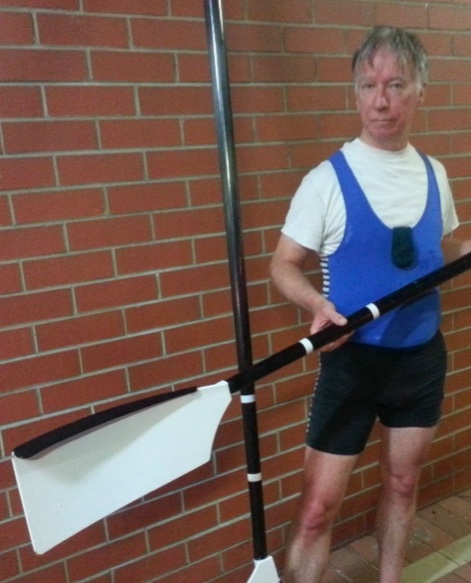 |
| Chris Lloyd, Bumbury RC, Masters Sculler |
First some context - I am an E masters rower and have its less than four and a half years since my first Learn to Row. I have been fortunate to have dedicated and enthusiastic coaches over that period - especially Nancy Churchill, Director of Master Rowing WA, for the past two years.
My main motivation for trying the RANDALLfoils was the awareness that my bow blade was too deep during my drive, and although I had improved things to some extent it was still an ongoing problem. They solved the problem almost straight away, and I am hopeful now that I am developing muscle memory so that if I do have to use a set of oars without foils then I should still have the blades in a good position. I am looking forward to seeing my data from the NK Empower Oarlock when I try that with my oars & foils in the coming weeks, as I suspect that the slip figures should improve. Subjectively I feel more loaded on the drive with the foils on ; but it will be nice to have some objective data.
So how did my races go? I was happy with the majority of my rows. There was a firm headwind that got stronger and swung around a bit as the morning went on, but I didn’t feel that the foils were affected by the wind at all. I was pleased with my first race (C1x) and it was the first time I have held my course in the middle of the lane for an entire race. I credited that to the foils and the even blade depths, so that was a bonus. Second race (E1x) wasn’t as good but by then the wind had picked up and was blowing more diagonally. The third race was a C2x and went well. By that stage was a bit tired and had the occasional false stroke but I found with light hands the blades with the foils tended to correct themselves without too much trouble. Overall I was really pleased with the foils, and will continue trialing them over winter.
Chris Lloyd, Bumbury RC, Western Australia.
Wednesday, 28 March 2018
Rowing WA approve the RANDALLfoil
Rowing Western Australia becomes the first governing body to officially approve the RANDALLfoil for racing at all state-based regatta's.
Although the RANDALLfoil meets all FISA regulations, the long process of official certification is well underway.
I would like to thank Nancy Churchill, Director of Masters Rowing WA, for her ongoing support for the advancement of this innovation.

Although the RANDALLfoil meets all FISA regulations, the long process of official certification is well underway.
I would like to thank Nancy Churchill, Director of Masters Rowing WA, for her ongoing support for the advancement of this innovation.

Friday, 16 March 2018
Rowing Australia Provisional Results
Trials of RANDALLfoils were conducted at the National Women's Training Centre in Penrith


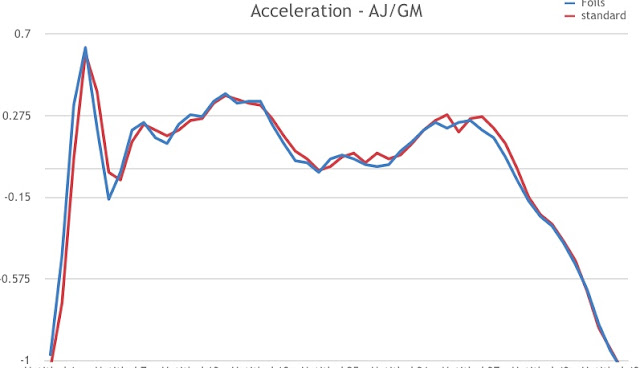
For a full copy of the results, please write to Ian at randallfoiloar@gmail.com
Test Protocole:
5 x 100% efforts conducted over a 1000m distance with a direct 'oar-for-oar' comparison, without altering rigging, gate heights or oar pitch.
Results:
3% speed increase with RANDALLfoils
Reduced oar catch slip
Increased acceleration


For a full copy of the results, please write to Ian at randallfoiloar@gmail.com
Thursday, 1 March 2018

Thursday, 30 November 2017

Wednesday, 23 August 2017
Performance RANDALL foil's for Sweep and Sculling Blades
 |
| Clean Powerful Strokes |
- Fit directly to the top edge of the blade
- Machined from lightweight and durable engineering grade plastic
- Will fit Croker and Concept 2 blades
Monday, 24 July 2017

Wednesday, 21 June 2017
What is Oar Shaft Drag ?
Oars shafts contribute to boat speed purely as a lever.
Oar Shaft Drag is the extent in which an oar shaft encounters the water, counteracting the forward momentum of the boat. The rower's effort moves the boat but with normal oars is required to move up to half of the oar shaft through the water.

You can see in the image below that half of the oar shaft is in contact with the water. The rower forces the shaft down into the water at the catch, pulls the shaft through the water during the stroke and then draws it to the surface at the finish.
Each of these movements effects boat speed, and when this is multiplied by eight oars and then by over 200 strokes in a race this drag effect is huge.
The role of placing a Randallfoil on a blade is to remove the oar shaft completely from contact with the water.
Oar Shaft Drag is the extent in which an oar shaft encounters the water, counteracting the forward momentum of the boat. The rower's effort moves the boat but with normal oars is required to move up to half of the oar shaft through the water.

Each of these movements effects boat speed, and when this is multiplied by eight oars and then by over 200 strokes in a race this drag effect is huge.
The role of placing a Randallfoil on a blade is to remove the oar shaft completely from contact with the water.
 |
| The untidy splash of a normal blade |
Tuesday, 20 June 2017
Randallfoils 1.0 Launched
"A foil is a lifting surface that operates in water."
You will achieve a perfectly straight draw through, just as you would on a rowing machine. All your power is transferred horizontally into direct forward motion.
You will notice some other advantages
- A smoother finish
- Better stability and consistency in crew rowing
- Faster racing starts
- A more even running boat wake
Randall foils are computer designed and precision cut to fit Croker, Concept 2, Empacher and Braca blades sweep and sculling blades.. Made from a durable and light ‘wearex’ plastic to ensure flexibility and strength that will not splinter or shatter if you encounter an impact.
*Speed increases were seen during our studies, comparing like for like, swapping only oars with/without Randall foils over various distances and conditions.
Click on the Purchase page to view prices.
*Speed increases were seen during our studies, comparing like for like, swapping only oars with/without Randall foils over various distances and conditions.
Click on the Purchase page to view prices.
Wednesday, 10 May 2017
Subscribe to:
Posts (Atom)